Creative Mission

COMPREHENSIVE CREATIVE CREATIVITY

Our "Creative Mission" is to foster a rich, interdisciplinary dialogue that will convey and forge new tools and applications for creative, critical and philosophical thinking; engaging the world in the process. Through workshops, tutorials and social media platforms we also strive to entertain, educate and empower people - from individuals, to businesses, governments or not-for-profit groups; we aim to guide them in building a base of constructive ideas, skills and a Brain Fit paradigm - thereby setting the stage for a sustainable, healthy, and creative approach and lifestyle . These synthesized strategic "Critical Success Factors" - can then give rise to applied long-term life or business - Operating Living Advantages and Benefits.

And, at the same time, we encourage Charlie Monger's key attitude and belief - for and with all of whom we reach - " develop into a lifelong self-learner through voracious reading; cultivate curiosity and strive to become a little wiser (and more grateful)* everyday."


* CCC Added - Editor

Search This Blog

Showing posts with label #BRAINFIT #SLEEP #DIET #EXERCISE. Show all posts

Thursday, 20 December 2018

#HARVARD: The #Health Benefits of #TAICHI


Harvard Health Publishing Logo

This gentle form of exercise can help maintain strength, flexibility, and balance, and could be the perfect activity for the rest of your life
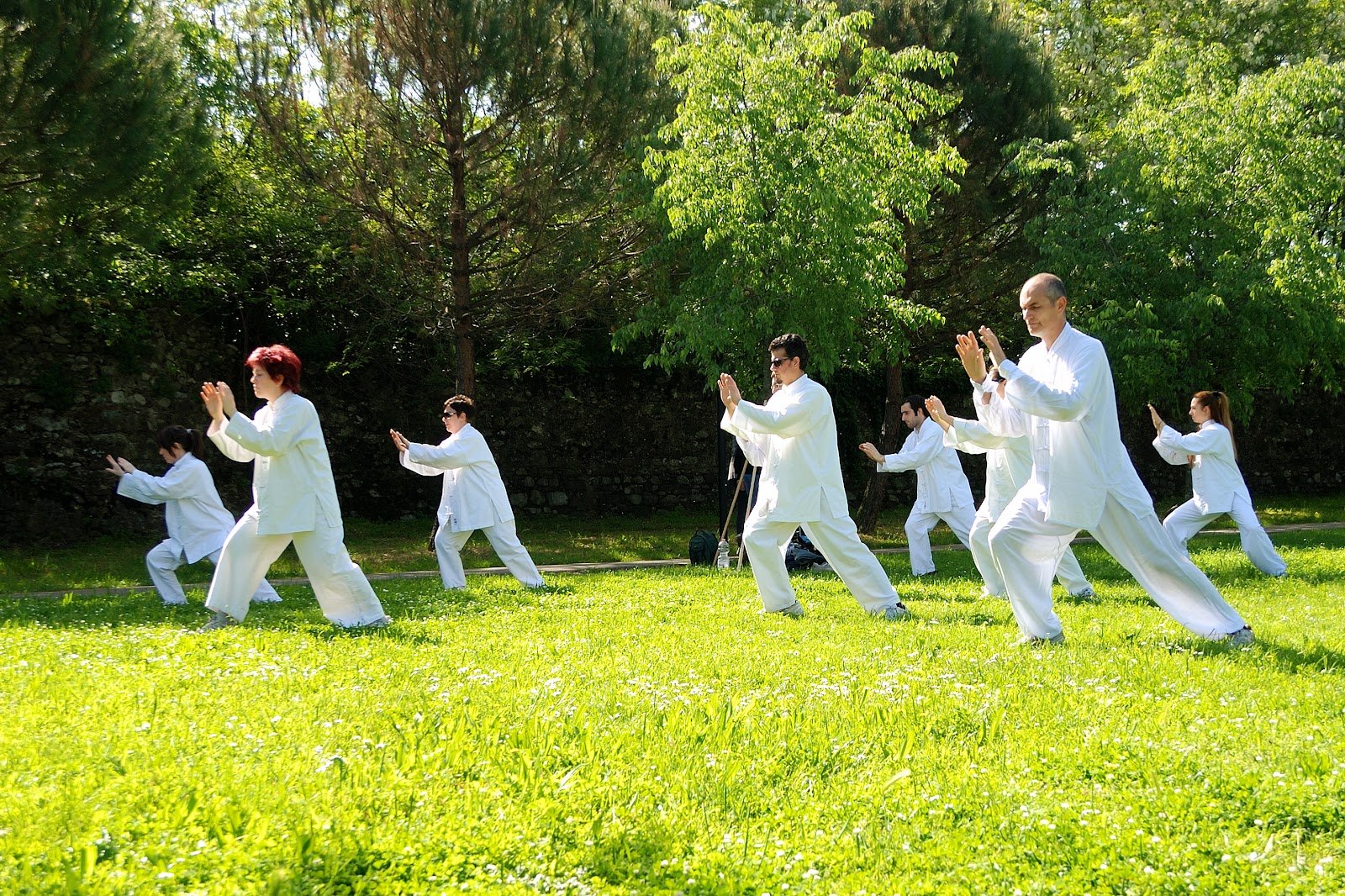


Image result for tai chi benefits


Tai chi is often described as "meditation in motion," but it might well be called "medicationin motion." There is growing evidence that this mind-body practice, which originated in China as a martial art, has value in treating or preventing many health problems. And you can get started even if you aren't in top shape or the best of health.
In this low-impact, slow-motion exercise, you go without pausing through a series of motions named for animal actions — for example, "white crane spreads its wings" — or martial arts moves, such as "box both ears." As you move, you breathe deeply and naturally, focusing your attention — as in some kinds of meditation — on your bodily sensations. Tai chi differs from other types of exercise in several respects. The movements are usually circular and never forced, the muscles are relaxed rather than tensed, the joints are not fully extended or bent, and connective tissues are not stretched. Tai chi can be easily adapted for anyone, from the most fit to people confined to wheelchairs or recovering from surgery.

Tai chi movement

Image result for tai chi benefits


A tai chi class practices a short form 
"A growing body of carefully conducted research is building a compelling case for tai chi as an adjunct to standard medical treatment for the prevention and rehabilitation of many conditions commonly associated with age," says Peter M. Wayne, assistant professor of medicine at Harvard Medical School and director of the Tai Chi and Mind-Body Research Program at Harvard Medical School's Osher Research Center. An adjunct therapy is one that's used together with primary medical treatments, either to address a disease itself or its primary symptoms, or, more generally, to improve a patient's functioning and quality of life.

Belief systems

You don't need to subscribe to or learn much about tai chi's roots in Chinese philosophy to enjoy its health benefits, but these concepts can help make sense of its approach:
  • Qi — an energy force thought to flow through the body; tai chi is said to unblock and encourage the proper flow of qi.
  • Yin and yang — opposing elements thought to make up the universe that need to be kept in harmony. Tai chi is said to promote this balance.

Tai chi in motion

Image result for tai chi benefits

A tai chi class might include these parts:
Warm-up. Easy motions, such as shoulder circles, turning the head from side to side, or rocking back and forth, help you to loosen your muscles and joints and focus on your breath and body.
Instruction and practice of tai chi forms. Short forms — forms are sets of movements — may include a dozen or fewer movements; long forms may include hundreds. Different styles require smaller or larger movements. A short form with smaller, slower movements is usually recommended at the beginning, especially if you're older or not in good condition.
Qigong (or chi kung). Translated as "breath work" or "energy work," this consists of a few minutes of gentle breathing sometimes combined with movement. The idea is to help relax the mind and mobilize the body's energy. Qigong may be practiced standing, sitting, or lying down.

Getting started


Image result for tai chi benefits

The benefits of tai chi are generally greatest if you begin before you develop a chronic illness or functional limitations. Tai chi is very safe, and no fancy equipment is needed, so it's easy to get started. Here's some advice for doing so:
Don't be intimidated by the language. Names like Yang, Wu, and Cheng are given to various branches of tai chi, in honor of people who devised the sets of movements called forms. Certain programs emphasize the martial arts aspect of tai chi rather than its potential for healing and stress reduction. In some forms, you learn long sequences of movements, while others involve shorter series and more focus on breathing and meditation. The name is less important than finding an approach that matches your interests and needs.
Check with your doctor . If you have a limiting musculoskeletal problem or medical condition — or if you take medications that can make you dizzy or lightheaded — check with your doctor before starting tai chi. Given its excellent safety record, chances are that you'll be encouraged to try it.
Consider observing and taking a class. Taking a class may be the best way to learn tai chi. Seeing a teacher in action, getting feedback, and experiencing the camaraderie of a group are all pluses. Most teachers will let you observe the class first to see if you feel comfortable with the approach and atmosphere. Instruction can be individualized. Ask about classes at your local Y, senior center, or community education center. The Arthritis Foundation (www.arthritis.org; 800-283-7800, toll-free) can tell you whether its tai chi program, a 12-movement, easy-to-learn sequence, is offered in your area.
If you'd rather learn at home, you can buy or rent videos geared to your interests and fitness needs (see "Selected resources"). Although there are some excellent tai chi books, it can be difficult to appreciate the flow of movements from still photos or illustrations.
Talk to the instructor. There's no standard training or licensing for tai chi instructors, so you'll need to rely on recommendations from friends or clinicians and, of course, your own judgment. Look for an experienced teacher who will accommodate individual health concerns or levels of coordination and fitness.
Dress comfortably. Choose loose-fitting clothes that don't restrict your range of motion. You can practice barefoot or in lightweight, comfortable, and flexible shoes. Tai chi shoes are available, but ones you find in your closet will probably work fine. You'll need shoes that won't slip and can provide enough support to help you balance, but have soles thin enough to allow you to feel the ground. Running shoes, designed to propel you forward, are usually unsuitable.
Gauge your progress. Most beginning programs and tai chi interventions tested in medical research last at least 12 weeks, with instruction once or twice a week and practice at home. By the end of that time, you should know whether you enjoy tai chi, and you may already notice positive physical and psychological changes.

No pain, big gains

Image result for tai chi benefits

Although tai chi is slow and gentle and doesn't leave you breathless, it addresses the key components of fitness — muscle strength, flexibility, balance, and, to a lesser degree, aerobic conditioning. Here's some of the evidence:
Muscle strength. Tai chi can improve both lower-body strength and upper-body strength. When practiced regularly, tai chi can be comparable to resistance training and brisk walking.
"Although you aren't working with weights or resistance bands, the unsupported arm exercise involved in tai chi strengthens your upper body," says internist Dr. Gloria Yeh, an assistant professor at Harvard Medical School. "Tai chi strengthens both the lower and upper extremities and also the core muscles of the back and abdomen."
Flexibility. Tai chi can boost upper- and lower-body flexibility as well as strength.
Balance. Tai chi improves balance and, according to some studies, reduces falls. Proprioception — the ability to sense the position of one's body in space — declines with age. Tai chi helps train this sense, which is a function of sensory neurons in the inner ear and stretch receptors in the muscles and ligaments. Tai chi also improves muscle strength and flexibility, which makes it easier to recover from a stumble. Fear of falling can make you more likely to fall; some studies have found that tai chi training helps reduce that fear.
Aerobic conditioning. Depending on the speed and size of the movements, tai chi can provide some aerobic benefits. If your clinician advises a more intense cardio workout with a higher heart rate than tai chi can offer, you may need something more aerobic as well.

 TAI CHI FOR HEALTH VIDEO 
(60 Mins)

Selected resources

An Introduction to Tai Chi Harvard Health Special Report
Tai Chi Health www.taichihealth.com
Tree of Life Tai Chi Centerwww.treeoflifetaichi.com
Image result for tai chi benefits


Did you enjoy this post? Sign up for our "Picasso Creative Writing Newsletter" to get the TOP monthly posts, articles, reports and studies, like this.


 PICASSO CREATIVE WRITING DAILY​ ​®
CREATIVE WRITING
Image result for health is wealth


Disclaimer: The facts and opinions expressed within this article are the personal opinions of the author. Picasso Creative Writing does not assume any responsibility or liability for the accuracy, completeness, suitability, or validity of any information in this article.

Friday, 14 December 2018

#Okinawa, Japan: The place where #people have the longest #lifespan - why do they live so long?


 Okinawa: Per head of population, there are more centenarians on Okinawa than anywhere else.


"This," says Kazumi Kayo, "is one of the reasons we Okinawans live so long." We're in the Makishi Public Market in Naha, Okinawa's capital, and she's just handed me what looks like a lump of scaly wood. Smooth and tobacco coloured, tapering to a point at both. It's katsuobushi, dried and smoked bonito tuna. To Okinawans this is catnip, a flavour enhancer that you add to soups, the pork dishes that are an Okinawan specialty and just about any other main-course dish. You can buy it pre-flaked, in which case it looks like pink, feathery wood shavings, but diligent cooks like Kayo will shave off what they need, as you would with parmesan.

Kazumi Kayo operates Yonner Food, an experience into the Okinawan way of life via the medium of Ryukyuan cuisine and culture. We've spent half an hour with her trolling through the market, admiring tuna, parrot fish, sweet potatoes, lobster, the local version of donuts and odd bits of pork.


SECRETS OF LONGEVITY


 In the kitchen of her apartment she makes us rose tea, from hibiscus flowers which unfurl prettily in our glasses. Then it's down to business as we prepare pork belly in stock with soya garnished with katsuobushi, seaweed soup and a stir fry made with goya, the bitter gourd with a pimply skin, onion, carrot, more pork, eggs and tofu.


Traditional dance performers.


Okinawans are famously long lived. Once past the age of 65, men can expect to live to about 84, for women it's close to 90. Per head of population, there are more centenarians on Okinawa than anywhere else, five times more than in the rest of Japan, and that's a high bar. Rates of cancer, stroke, coronary heart disease and depression are well below the average for advanced economies yet they don't go to gyms nor do they jog. Instead you can see elderly Okinawans working in their vegetable gardens, practising tai chi and riding bikes.

Food is part of the reason. It's a low-carb diet with lots of fruit, tofu, vegetables and seaweed. Rather than seafood, the No. 1 source of protein is pork, and not just the fatty pork belly but also pig's trotters, roasted pork ribs and pork ears, served thinly sliced, simmered slowly and dressed in sake vinaigrette. But is it just down to food?

LOW CARB DIET?


"Maybe it's just happiness," according to Chris Dong, my guide, a former US Marine who met his Japanese wife when he was stationed on Okinawa, and stayed. "Okinawans are bonding, social animals, they spend a lot of time with family and friends, and they're incredibly supportive."

Okinawans' longevity is not a given. Kazumi Kayo, in her 50s, tells me hers is the first generation of Okinawans that will not live as long as their parents. "Traditional food was also medicine," she says, "and it's slow food. Now people have less time so they go for convenience foods and that means a less healthy diet and we're seeing more and more health problems."

Okinawa is the largest of the Ryukyu Islands, the semi-circular archipelago of over 150 islands stretched between southern Japan and Taiwan.

In historic times the rulers of Okinawa owed their allegiance to the Chinese emperor, not to the bit-players in Japan. In Shuri Castle, former seat of the supreme ruler of Okinawa, a diorama shows a new ruler being anointed by emissaries from China. Until given the tick by China, he was a ruler in waiting. In the early 1600s the island was invaded by samurai sent by Japan's powerful Satsuma clan, the beginning of a slow but steady incorporation of the 

ATTITUDE AFFECTS HEALTH


Another facet of Okinawan culture that traces its origins to China is the noble art of karate, open hand fighting. Chinese martial arts were first introduced around 1400 and when the Satsuma samurai banned weapons in the wake of their invasion, Okinawan karate put on a spurt. According to popular belief it was also this ban on weaponry that gave birth to the even more deadly martial art of kobudo, which uses farm and fishing implements including staves, oars and the chain-linked nunchaku to lethal effect.
 
Tetsuhiro Hokama is the director of the Okinawa Prefecture Karate Museum, found on the second floor of Hokama Sensei's dojo. It's a fascinating collection of photos, books and weaponry as well as a chance to peek at the classes that Hokama conducts for students who come from all over the world. Hokama's specialty is kyusho, attacking nerve points, which allows a small opponent to paralyse a much larger one. It also involves a severe toughening up exercise to withstand blows, also designed to weaponise elbows, hands, feet and knees. Just watching the pounding that goes on in the warm-up is painful.

In Naha, the Dojo bar is tribute to the fighting arts of Okinawa operated by British-born James Pankiewicz, a karate aficionado. It's a favourite hangout for expats as well as the local Okinawan martial arts community and Pankiewicz is the man to know if you've come here to work on your karate, or just absorb the atmosphere. The Dojo Bar is just as renowned for its range of British draught beers, wines and awomori-based drinks, cure-alls for any martial arts related disorders. Just don't go looking to fight.

BENEFITS OF MARTIAL ARTS


Although its people speak Japanese, go to bathhouses and arrange their empty footwear with geometric precision, Okinawa is not Japan. Okinawa is more chilled, less workaholic and less self conscious than the rest of Japan. It's where Japan takes its shirt off, a subtropical island with palm trees and flaming bougainvillea and diving on the to-do list. The flight in to Naha Airport takes you over a mottled sea dotted with coral reefs. Hawaiian style shirts are popular, and it was Okinawans living in Hawaii who introduced the splashy floral patterned shirt to the world. While Japan was historically isolationist, Okinawa was outward looking and multicultural.

"You should see our whales," says the man in the tourist office. "Between January and the end of March, humpback whales spend the winter here and you can see them leaping from the water."
"But I thought whale was a menu item," I said.


The clear blue waters of the Kerama Islands, Okinawa.


Disclaimer: The facts and opinions expressed within this article are the personal opinions of the author. Picasso Creative Writing does not assume any responsibility or liability for the accuracy, completeness, suitability, or validity of any information in this article.

Thursday, 13 December 2018

#Cognitive #Fitness


Image result for world health net


To paraphrase one of the most moving statements I have heard, this one is from Dr. Robert Klatz: The goal to anti-aging medicine isn’t simply to reach your 90s and beyond, rather to remain as healthy, independent, and mentally sharp as possible through the aging process, to have the time to enjoy spending it with family and friends doing things you like and want to do.


Related image


Keeping the brain healthy is a big part of being able to have a long healthspan, research is proving that there is a lot we can do to empower our brains to help keep them healthy and lessen the risk of brain disease to stay cognitively fit for a lifetime.
By integrating a few simple specific changes in diet, exercise, and lifestyle into daily routines it is possible to add years of mental stamina and vitality, which in turn serves the body well. By improving cognitive fitness you can strengthen your intellectual prowess, promote ability to recall, and protect brain based skill that are essential to a full, rewarding, independent lifespan.
There are six cornerstone factors to effective cognitive fitness that should be done together to reap the most benefits: Eating a plant based diet ( as much as possible); Maintaining a regular exercise program and physical activity; Getting enough sleep; Managing Stress; Nurturing social contacts (in real life vs online); and Continuing to challenge your brain.

There is no magic pill or superfood to prevent cognitive decline, but when combined these cornerstones of cognitive fitness can yield real results, and lead to changes in brain structure and function; these factors are equal parts to a cohesive plan and really won’t work in isolation. Just adding more fiber to the diet, or a walk to the daily routine will not be enough to halt mental decline, rather diet, sleep, exercise, social interaction, stress management, and mental stimulation will work in harmony to promote and yield positive results.
Nutrition is an important strategy, following a diet plan that includes a lot of fruits, vegetables, legumes, and whole grains can go a long way. Try to get most protein from plant sources, fish, and healthy fats such as olive oil. Omega-3 fatty acids, B vitamins, and antioxidants are well known to support brain health, in an added benefit many of these foods also help to protect heart health.
Green leafy vegetables such as spinach, broccoli, kale, and collards are rich in vitamin K, beta carotene, lutein, and folate which have been shown to help slow cognitive decline.
Fatty fish such as salmon, cod, pollack, and tuna are abundant in omega-3 fatty acids and unsaturated fats that are linked to lower blood levels of dangerous beta amyloids. Be sure to choose varieties that are low in mercury at least twice a week. If you are not a fish fan talk to a medical professional about a supplement or chooses terrestrial omega-3 sources such as walnuts, flaxseeds, and avocados.
Flavonoids give berries their brilliant hues and have been shown to help improve memory, one Harvard study found women who consumed two or more servings per week of blueberries and strawberries delayed memory decline by up to 2.5 years.

Provided there is not an allergy, nuts are great sources of protein and healthy fats, walnuts in particular may also help to improve memory. A UCLA study linked higher walnut intake to improved cognitive test scores. Walnuts are also in high alpha linolenic acid which helps to lower blood pressure and protect the arteries.
Swimming may just be the perfect exercise, water takes strain off the joints to help them move more fluidly, it’s less weight bearing, and it has been shown to improve mental states and elevates stress while it helps to burn calories, tone up, and improves focus, and coordination.

Tai chi combines movement and relaxation that is good for both the body and mind. The series of graceful movements are a good option for any age and is very helpful to improving concentration and balance while boosting thinking skills. Yoga and meditation are also a great options which will also help with stress management.
Walking is one of the most simple and effective powerful exercises that can be done anywhere, at anytime, without equipment for free. Not only will it help you to stay fit, it strengthens bones, keeps blood pressure in check, combats stress, and lifts moods. Several studies have shown walking to help improve memory and resist age related memory loss.
The Department of Health and Human Services recommends adults should get at least 150 minutes of moderate exercise or 75 minutes of vigorous exercise each week, which can be done in a combination of moderate and vigorous activity. Researchers from the University of British Columbia have found exercise to not only get the heart pumping and sweat glands going but also boost the size of the hippocampus which is the area of the brain involved in verbal memory and learning; as well as leading to the release of cellular growth factors that are important to neurogenesis. Exercise even helps to improve sleep, moods, and reduce stress and anxiety which can contribute to cognitive impairment.
Insufficient sleep is bad for the body and mind, overtime continued sleep deprivation can give rise to a number of chronic health problems. Experts suggest that we should get at least 6-7 hours of sleep each night, less than 6 can have serious health ramifications.

Cognitive and social engagement have been shown to be protective against cognitive decline; neuronal plasticity appears to challenge the brain, for example learning a new skill leads to changes in the adult brain such as creating new connections between brain cells by changing the balance of available neurotransmitters and how connections are made. Challenging the brain and staying socially connected can help to protect the brain and keep it more resilient against changes that promote and cause dementia.

Think, read, paint/draw, learn something new, meet new people, listen to music, exercise, take up a new hobby or sport, ask questions and listen to stories in reply, or volunteer at a charity as these all require the brain to do some work, especially when encountering something it has not done before. The best activities are ones that you enjoy; just as it is important to stick to an exercise, diet, or meditation plan, it is also important to stick to a program of cognitive fitness to reap the benefits. Staying mentally sharp comes down to using your mind and body, no matter your age. Be well, and here’s to a long and happy healthspan.

Remember, That Old #Adage "Health Is #Wealth"


"Salutem est divitiae"
Health is Wealth

Image result for health is wealth


Did you enjoy this post? Sign up for our "Picasso Creative Writing Newsletter" to get the TOP monthly posts, articles, reports and studies, like this.



 PICASSO CREATIVE WRITING DAILY​ ​®
CREATIVE WRITING
Image result for health is wealth


Disclaimer: The facts and opinions expressed within this article are the personal opinions of the author. Picasso Creative Writing does not assume any responsibility or liability for the accuracy, completeness, suitability, or validity of any information in this article.

Wednesday, 12 December 2018

20 #Benefits of 30 Minutes of #Walking – Infographic


Image result for old people walking


WhatsApp+Image+2018-11-29+at+12.45.40+PM.jpeg


Did you enjoy this post? Sign up for our "Picasso Creative Writing Newsletter" to get the TOP monthly posts, articles, reports and studies, like this.


 PICASSO CREATIVE WRITING DAILY​ ​®
CREATIVE WRITING
Image result for health is wealth


Disclaimer: The facts and opinions expressed within this article are the personal opinions of the author. Picasso Creative Writing does not assume any responsibility or liability for the accuracy, completeness, suitability, or validity of any information in this article.

Tuesday, 11 December 2018

Can you grow your #hippocampus? Yes. Here’s #how, and #why it matters


By: Dr. Majid Fotuhi


hippocampus_brain


A pair of thumb-sized structures deep in the center of the human brain are critical for our ability to learn and remember. Thanks to their shape, each of them is called hippocampus — which means seahorse in Greek. These brain areas have the unique capacity to generate new neurons every day. In fact, recent human studies have shown that there are 700 new brain cells in the hippocampus every day. Most of these neurons, however, do not survive. In their new-born (pre-mature) phase, they need a great deal of support to survive, grow, and become an active member of the hippocampal community of neurons.

Research shows that we have the capacity to grow new neurons above and beyond what is generally produced in our hippocampus and to make them become mature and strong within weeks and months.

The best way to generate new hippocampal neurons is to exercise. In one study comparing brains of two groups of mice, the group that was assigned to running (lived in a cage with a running wheel in it) generated far more new neurons in their hippocampus than the group that was assigned to a regular cage without a running refill. Other studies have shown that people who exercise regularly and are physically fit have a much bigger hippocampus. The more you walk, the bigger your hippocampus will get and the less would be your risk for developing Alzheimer’s disease. One study showed that walking one mile a day lowers the risk of Alzheimer’s disease by 48%.


Recent research has also provided information about how hippocampus can grow even without generating brand new neurons. The small premature neurons that are born every day have the capacity to grow taller, larger, and stronger by getting the right nutrition, plenty of oxygen, a molecule called BDNF (Brain Derived Neurotrophic Factor) and stimulation. Some of the ways we can mature and nourish hippocampal neurons include eating a Mediterranean diet that includes olive oil, salmon and other food that are high in omega-3 fatty acids, and nuts. Omega-3 fatty acids are also neuronforestavailable as DHA and EPA supplements. My recent research, published in Nature Reviews and referenced below, showed that higher blood levels of these important fatty acids, which are the building blocks of neurons, is associated with larger hippocampus size, better memory, and a much lower risk of developing Alzheimer’s disease.

The fascinating new neuroscience discoveries have provided compelling evidence on how other simple lifestyle interventions can also grow the hippocampus size. Stress reduction and meditation, for example, have been shown to substantially expand the volume of hippocampus. Treatment of sleep apnea, with using a CPAP machine, is another way you can grow your hippocampus.
Learning a new language or challenging one’s brain by learning new facts is yet another way to grow the very part of your brain that is critical for our ability to keep your memories alive for a lifetime and stay sharp as we get older.


Unfortunately, hippocampus can shrink as easily as it can grow. Some of the ways to quickly shrivel it within months or years include stress, anxiety, untreated depression, obesity, uncontrolled diabetes, sedentary lifestyle, eating junk food, and concussions. Each of these negative risk factors have been associated with a smaller size hippocampus and a higher likelihood of developing Alzheimer’s disease in the future.

In summary, for the first time we have solid scientific evidence that we all have the capacity to grow the part of our brains that shrinks with aging and makes us prone to developing Alzheimer’s disease. 

A bigger hippocampus can protect us against dementia symptoms in our 70s and 80s. These exciting new discoveries should empower all of us to be proactive in keeping our brain healthy today and to ward off Alzheimer’s disease decades later.


References:


Fotuhi-photo-8-1-239x300– A Harvard and Johns Hopkins-trained neurologist and neuroscientist, Dr. Majid Fotuhi is chairman of Memosyn Neurology Institute, Medical Director of NeuroGrow Brain Fitness Center, and Affiliate Staff at Johns Hopkins Howard County General Hospital. He’ll chair a fascinating session at the upcoming 2015 SharpBrains Virtual Summit (November 17–19th).


Did you enjoy this post? Sign up for our "Picasso Creative Writing Newsletter" to get the TOP monthly posts, articles, reports and studies, like this.


 PICASSO CREATIVE WRITING DAILY​ ​®
CREATIVE WRITING
Image result for health is wealth


Disclaimer: The facts and opinions expressed within this article are the personal opinions of the author. Picasso Creative Writing does not assume any responsibility or liability for the accuracy, completeness, suitability, or validity of any information in this article.

Top Monthly Posts

Inspirations of passions


Make your interests gradually wider and more impersonal, until bit by bit the walls of the ego recede, and your life becomes increasingly merged in the universal life. An individual human existence should be like a river — small at first, narrowly contained within its banks, and rushing passionately past rocks and over waterfalls. Gradually the river grows wider, the banks recede, the waters flow more quietly, and in the end, without any visible break, they become merged in the sea, and painlessly lose their individual being.


Bertrand Russel

WEBSITE

WEBSITE
Visit Us Today!