Picasso Creative Writing Method: To execute, communicate and share our "CREATIVE MISSION" as set out below - *Comprehensive Creative Creativity with curated articles, posts, blogs and studies from around the world that support or relate to this rich inter-disciplinary approach to sustainable life-long creations and imagination.
Our "Creative Mission" is to foster a rich, interdisciplinary dialogue that will convey and forge new tools and applications for creative, critical and philosophical thinking; engaging the world in the process. Through workshops, tutorials and social media platforms we also strive to entertain, educate and empower people - from individuals, to businesses, governments or not-for-profit groups; we aim to guide them in building a base of constructive ideas, skills and a Brain Fit paradigm - thereby setting the stage for a sustainable, healthy, and creative approach and lifestyle . These synthesized strategic "Critical Success Factors" - can then give rise to applied long-term life or business - Operating Living Advantages and Benefits.
And, at the same time, we encourage Charlie Monger's key attitude and belief - for and with all of whom we reach - " develop into a lifelong self-learner through voracious reading; cultivate curiosity and strive to become a little wiser (and more grateful)* everyday."
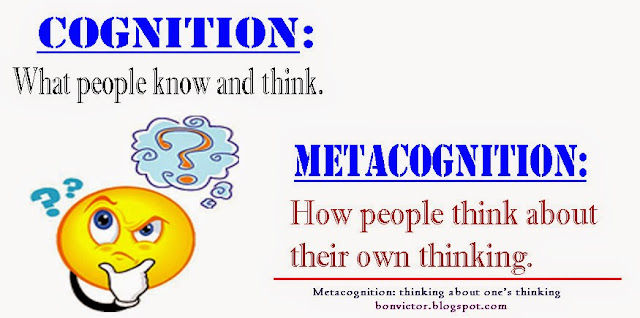
Metacognition is defined as thinking about one’s thinking or learning. More formally, “metacognition was originally referred to as the knowledge about and the regulation of one’s cognitive activities in learning processes” (Veenman, Van Hout-Wolters, & Afflerbach, 2006, p.3).
Too often students receive information, receive instructions, receive objectives, and receive grades without ever being asked to think about learning and the development of discrete skills. I believe that is a problem.
Teaching metacognitive skills that encourage students to become more aware of their learning can help them shift from passive to active participants in the classroom. If the teacher is the only person thinking critically about learning goals, progress, skill development, curriculum design, and assessment, that is a missed opportunity. Teachers must help students become active agents in the classroom who are able to make key decisions about what they learn and how they learn.
Here are 4 strategies teachers can use to encourage students to think about their learning:
Did you enjoy this post? Sign up for our "Picasso Creative Writing Newsletter"to get the TOP monthly posts, articles, reports and studies, like this.
Disclaimer: The facts and opinions expressed within this article are the personal opinions of the author. Picasso Creative Writing does not assume any responsibility or liability for the accuracy, completeness, suitability, or validity of any information in this article.
Emma Lazarus wrote “The New Colossus,” the poem for which she is best-known today, in 1883. It was created to sell at an auction to raise money to build the pedestal on which the Statue of Liberty would stand in New York harbor. (Although the statue was a gift from the people of France, American contributors paid for the platform.)
"Not like the brazen giant of Greek fame, With conquering limbs astride from land to land; Here at our sea-washed, sunset gates shall stand A mighty woman with a torch, whose flame Is the imprisoned lightning, and her name MOTHEROF EXILES. From her beacon-hand Glows world-wide welcome; her mild eyes command The air-bridged harbor that twin cities frame.
"Keep, ancient lands, your storied pomp!" cries she With silent lips. "Give me your tired, your poor, Your huddled masses yearning to breathe free, The wretched refuse of your teeming shore. Send these, the homeless, tempest-tost to me, I lift my lamp beside the golden door!"
Biography
Synopsis
Emma Lazarus was born on July 22, 1849 into a wealthy New York family that was descended from Sephardic Jewish Americans. She displayed an early talent for poetry, and attracted the notice of Ralph Waldo Emerson with her first book. Her poem "The New Colossus" was chosen to be displayed on the base of the Statue of Liberty. It features the famous lines "Give me your tired, your poor, / Your huddled masses yearning to breathe free."
Early Life
Emma Lazarus was born on July 22, 1849 in New York City. She was the fourth of seven children born to Moses and Esther Nathan Lazarus. The family was descended from early Jewish settlers in America. Of Portuguese descent, the family was wealthy, earning its fortune in the sugar refining business. Emma received a classical education and the family moved in high society, which included owing a mansion in Newport, Rhode Island.
Poet & Translator
Emma’s parents supported her interest in poetry. In 1866, her father published a book of her poetry called Poems and Translations Written Between the Ages of Fourteen and Seventeen. Two years later, Emma sent her writing to Ralph Waldo Emerson, who was sufficiently impressed to become her mentor. During her lifetime, Emma met with other famous writers, including Robert Browning, William Morris, and Henry James.
Did you enjoy this post? Sign up for our "Picasso Creative Writing Newsletter"to get the TOP monthly posts, articles, reports and studies, like this.
Disclaimer: The facts and opinions expressed within this article are the personal opinions of the author. Picasso Creative Writing does not assume any responsibility or liability for the accuracy, completeness, suitability, or validity of any information in this article.
Language and communication are as vital as food and water. We communicate to exchange information, build relationships, and create art. In this Spotlight feature, we look at how language manifests in the brain, and how it shapes our daily lives.
We are all born within a language, so to speak, and that typically becomes our mother tongue.
Along the way, we may pick up one or more extra languages, which bring with them the potential to unlock different cultures and experiences.
Language is a complex topic, interwoven with issues of identity, rhetoric, and art.
As author Jhumpa Lahiri notes meditatively in the novel The Lowlands, "Language, identity, place, home: these are all of a piece — just different elements of belonging and not-belonging."
But when did our ancestors first develop spoken language, what are the brain's "language centers," and how does multilingualism impact our mental processes?
We will look at these questions, and more, in this Spotlight feature about language and the brain.
1. What makes human language special?
When did spoken language first emerge as a tool of communication, and how is it different from the way in which other animals communicate?
As Prof. Mark Pagel, at the School of Biological Sciences at the University of Reading in the United Kingdom, explains in a "question and answer" feature for BMC Biology, human language is quite a unique phenomenon in the animal kingdom.
While other animals do have their own codes for communication — to indicate, for instance, the presence of danger, a willingness to mate, or the presence of food — such communications are typically "repetitive instrumental acts" that lack a formal structure of the kind that humans use when they utter sentences.
Did you enjoy this post? Sign up for our "Picasso Creative Writing Newsletter"to get the TOP monthly posts, articles, reports and studies, like this.
Disclaimer: The facts and opinions expressed within this article are the personal opinions of the author. Picasso Creative Writing does not assume any responsibility or liability for the accuracy, completeness, suitability, or validity of any information in this article.
Logic games and logic puzzles are a great way to support the development of a growth mindset. Developing a growth mindset is an essential part of our jobs as educators. We have a responsibility to teach our students how to persevere through difficult problems, and how to manage the frustrations of “not knowing the answer.” This is particularly important to teach to our fast finishers that rarely struggle to understand new concepts or complete work. (It’s very hard to watch students get all the way to middle school, or even high school, before they begin feeling challenged. By that point they have not developed the strategies to manage their frustrations, and they can easily fall apart!)
While perseverance is something we work on throughout our day, one of my favorite way to develop a growth mindset is through logic games and logic puzzles. We even have a Growth Mindset Center on our Math Rotation Board (you can see it in the bottom right corner).
Over the years I have packed my shelves with a variety of games and puzzles that help challenge my learners. Some I purchased with high hopes, only to watch them go unused by class after class. Others, however, were huge hits and I have actually had to replace because they have been so “loved.” Today I wanted to share my student’s FAVORITE logic games and puzzles with you so you can begin to develop your own library of challenges for your classroom!
You can click on any of the images or game titles below for an Amazon affiliate link, where you can find a full summary and reviews of each book. If you happen to order a game from the link provided, a I earn a small percentage of that sale, which goes towards the maintenance of my blog.
Did you enjoy this post? Sign up for our "Picasso Creative Writing Newsletter"to get the TOP monthly posts, articles, reports and studies, like this.
Disclaimer: The facts and opinions expressed within this article are the personal opinions of the author. Picasso Creative Writing does not assume any responsibility or liability for the accuracy, completeness, suitability, or validity of any information in this article.
The question of ‘what is right (or wrong)’ or ‘what one ought to do’ is possibly the earliest and the most pervasive philosophical problem. Countless arguments and methods of justification of ethical, moral and, more generally, normative claims have been developed over the millennia, but no argument has fully satisfied the desiderata of objective truth. An authoritative answer to the normative question requires grounding of the alleged truth in objective facts or some self-evident principle.
Ethical convictions that are not well grounded in objective facts but only in the belief that something just is right have the logical consequence of validating their opposite as also right, that is, such convictions are immanently self-defeating. Were I to validate an ethical claim as objectively and universally right on the basis of my subjective belief, I would have also validated subjective belief as a sufficient basis of ethical judgement in general, and thus implicitly justify your acting according to your subjective belief in what is right, irrespective of whether our beliefs were in agreement or opposed to one another. This would amount to ethical pluralism, but an affirmation of a plurality of possibly incompatible ethical judgements as independently right implies a negation of a universally binding, objective criterion of being right. If no one can be universally right then the conflict of rights is reduced to the conflict of might, and resolution can only be achieved through violent repression or destruction of one’s ethical adversary. The only universal principle affirmed by ethical pluralism is therefore violence, but an affirmation of violence by everyone against anyone is not ethically normative at all: it is a radical rejection of the possibility of being objectively right or wrong in any conflict.
But perhaps your position is not that of an ethical-pluralist; perhaps you just know that you are right and that I am wrong, and you do not claim that two conflicting views can both be right at the same time. Let us call this attitude ethical elitism. But ethical elitism leads to the same impasse as ethical pluralism. If you just know that you are right and I am wrong, and I just know that you are wrong and I am right, then violence is still the only means of resolving conflict, irrespective of who is objectively wrong and who is right. Both attitudes preclude peaceful resolution of conflict via public deliberation.
Successful deliberation (that is, deliberation per se) requires meaning: a commonly accepted normative structure for discerning sense from nonsense, logically valid from logically false. Rejection of a common structure has the same effect as ethical pluralism or elitism, that is, it also necessitates violence in situations of conflict. The most fundamental normative structure, without which meaning could not exist even on the subjective level, are the laws of classical logic: the law of non-contradiction (no statement can be both true and false at the same time and in the same context), identity (at any given time, everything is absolutely identical only to itself) and excluded middle(every statement must be either true or false, or be composed of parts that are either true or false). But ‘so what’, one might say, ‘I might be contradicting myself but I don’t care as long as I get what I want’. The problem which this position is that by even thinking about what I want I already apply the law of identity, and by acting with the intention to get what I want out of action I must act consistently and unambiguously towards a goal, otherwise my actions would contradict one another and could not reliably achieve the desired result. We all affirm the fundamental laws of logic simply by acting intentionally, and this affirmation is presupposed in every instance of intersubjective conflict. (See also Lord, Errol. What You’re Rationally Required to Do and What You Ought to Do (Are the Same Thing!). Mind, 2017) READ MORE
LEARN MORE
Did you enjoy this post? Sign up for our "Picasso Creative Writing Newsletter"to get the TOP monthly posts, articles, reports and studies, like this.
Disclaimer: The facts and opinions expressed within this article are the personal opinions of the author. Picasso Creative Writing does not assume any responsibility or liability for the accuracy, completeness, suitability, or validity of any information in this article.
Design thinking is not the thing that most business think of when a problem or a change is required. Most of the businesses run on the concept of analytical thinking. Most decisions taken by C-level employees and other executives are based on the well derived reports and after a lot of logical reasoning. This has been successful for almost everyone.
But most of these businesses are unaware of the need for design thinking. They find it difficult to digest that there is a whole other aspect of thinking that is different from analytical thinking. Not because they are complacent but just the ignorance and lack of awareness about another type of thinking.
Here, we are going to discuss the main differences between design thinking and analytical thinking.
Reasoning
Reasoning is the foundation of any kind of thinking. Most decisions humans make are based on the reasons of the outcomes. When you are stuck at a a junction of thought and need to select a path, you always tend to come up with reasons which is logical to take a particular path. This process is called reasoning. There are multiple types of reasoning and that matters on how you define the type of thinking you do.
Deductive Reasoning
Most of us tend to make decisions based on this kind of reasoning. Deductive reasoning starts by considering the general rules and laws and then moves to the particular problem in hand. Basically from cause to effect. This helps making in logical conclusions.
Inductive Reasoning
Inductive reasoning starts from detailed observations based on experience or verifiable facts of reality rather than theory or pure logic. Once that is achieved then it moves to the next step of general plausible principle based conclusions.
Abductive Reasoning
Abductive reasoning starts with incomplete observations and moves to possible hypotheses. This type of reasoning achieves a plausible conclusion but does possibly verify it.
What is analytical thinking ?
Analytical thinking is the ability/skill of an individual to scrutinize and break down facts and thoughts into strengths and weaknesses. It involves thinking in thoughtful, discerning ways in order to analyse data, recall and use information which leads to effective decisions or solve critical problems.
Analytical thinking emphasises mostly deductive reasoning and inductive reasoning but no abductive reasoning. It also focuses on refinement and efficiency of a thought and on reliability, consistency and predictability of the outcomes.
It involves the following factors :
Focusing on facts and evidence.
Deductive and/or inductive Reasoning.
Analysing data or information or systems.
Dissecting data or information which is complex into simpler constituents.
Partitioning or breaking down an analysis into mutually exclusive categories.
Analysis of a problem into alternative possibilities and and then elimination or systematic rejection of unacceptable alternatives.
Design thinking is the ability/skill mostly used by designers or innovators to make a user centric solution. Unlike analytical thinking, this need not necessarily be to solve a problem or make a change in the existing process. This thought process mainly points to innovative outcomes.
It refers to cognitive, strategic and practical processes by which design concepts are developed. Its the method designers use in ideation and development which can also has applications elsewhere.
Design thinking emphasises mostly abductive reasoning and it focuses on exploration (search, risk) which can lead to innovative outcomes and then validation of these outcomes to meet the user’s desired objective.
Design thinking has 5 stages. These stages are not always sequential and it is not required by the designers to approach them so. Designers will find the stages often occur in parallel and see repeated use on an iterative basis. So designers consider these stages as different modes that contribute to a project.
Empathy
Empathy, the first stage in design thinking is crucial because it allows you to set aside your own assumptions about the world in order to gain insight into users and their needs. This stage involves entering the world of the users and, having their perspectives so as to begin work on custom-designing a solution.
Define
During the Define stage of Design thinking, you put together the information you have created and gathered during the Empathize stage. You analyze your observations and synthesize them in order to define the core problems you have identified so far.
Ideate
This stage makes you ready to start generating ideas. With the knowledge you have gathered in the first two phases of design thinking, you can start to think outside the box to identify new solutions to the problem statement you’ve created, and you can start to look for alternative ways of viewing the problem.
Prototype
This stage of design thinking is where you produce inexpensive, scaled down versions of the product or specific features found within the product so you can further investigate the problem solutions generated in the previous step.
Test
This is where you go all in to test the finished product. You do all kind of rigorous testing on this product to ensure quality using the solutions identified during the prototyping phase. This is meant to be the final stage of design thinking, however in most cases, based on the test results the product is then redefined.
So which thinking is better ?
In the business world, analytical thinking is the “boss”, unarguably, it has provided with key insights and help make critical decisions. However, design thinking is what makes you stand out in the crowd. It helps you think out of the box, take risks and innovate.
Analytical thinking could be considered a part of the design thinking. Design thinking is a whole process put in place to create something new or come up with an innovative solution. This requires both strong analytical thinking and high amount of creativity.
Analytical thinking sticks to solving a problem by using data and making sense out of it and forming rich insights or patterns. Design thinking goes further and turns that information you learned and mixes it up with creativity and design skills to come up with some innovative (Be it in designing business models, new products or websites).
Without design thinking, innovation and competitive advantage becomes a lot more difficult. And, that’s what businesses should be aiming for. Companies are wise to create processes which encourage design thinking as well as analytical thinking.
A well balanced process of both analytical and design thinking could be the success formula the business are looking for.
LEARN MORE
Did you enjoy this post? Sign up for our "Picasso Creative Writing Newsletter"to get the TOP monthly posts, articles, reports and studies, like this.
Disclaimer: The facts and opinions expressed within this article are the personal opinions of the author. Picasso Creative Writing does not assume any responsibility or liability for the accuracy, completeness, suitability, or validity of any information in this article.
It's not exactly news that the Alternative Media is under assault: skeptical inquiry and dissenting narratives are smeared as "fake news," and new suspiciously corporate entities (NewsGuard et al.) claim to be "protecting" consumers from "fake news" as cover for their real agenda, which is limiting public exposure to skeptical, dissenting independent analysis.
Despite this semi-official censorship, we in the Alt-Media are having way more fun that the anxiety-ridden serfs in the Mainstream Media. There are many hard-working, honest journalists slaving away in the Mainstream (more accurately, the corporate-state) Media, but there's the neofeudal reality of their employment: If what they report undermines the ruling elites, they're not allowed to do their job.
MSM journalists have no agency: they report what they're told to report. They also have no control over what gets by their employers' editorial / corporate filters: question a big advertiser and your report will quietly be buried. Question the approved narrative and conclusion, and you'll be shunned, blacklisted, etc. If you make a fuss, you'll be let go in the next round of lay-offs.
BELOW ARE A FEW SELECTED VIDEOS DEMONSTRATING THE ABSENCE OF REAL CRISES REPORTING BY FAKE MSM SERFS
AND, LEST WE FORGET...
FIRST - THE OVERPOPULATION CRISIS
Everyone who labors in the corporate-state media lives in fear of the truth getting out:hence the full-spectrum freak-out whenever an insider turns leaker / whistleblower: oops, the happy-story cover is blown and the ugly truth is now revealed, including the collusion of the corporate-state media. (In the U.S. PBS / NPR is the quasi-state media, analogous to Japan's NHK, Britain's BBC or France's France24.)
SECOND - LIMITS TO GROWTH
The corporate-state media lives in terror that the truth will somehow leak out of the corporate-Imperial fortress, imperiling their jobs and perks.Their job isn't to report any truth that lays waste to the self-serving interests of the ruling elites; their job is to protect the ruling elites by "reporting" politically-correct narratives and playing up culturally divisive incidents to distract the masses from any awareness of their political invisibility and lack of financial independence or agency.
The MSM's other job is to scrub any mass dissent from their "news." So for example, U.S. corporate-state media coverage of the yellow vest movement in France is near zero. This is not random; it is all part of skewing the "news" to meaningless controversies and fawning politically correct / approved narratives stories.
THIRD - THE SIXTH EXTINCTION
A working-class rebellion against political and financial invisibility is anathema to America's ruling elites and their corporate allies in the MSMand hence the minimal coverage. You basically have to understand French to follow on-the-ground Alt-Media coverage in France of the yellow vest protesters.
The American MSM dutifully regurgitates the bogus narrative being pushed by France's elitist corporate-state media, that the yellow vest protesters are violent and thus need to be crushed by overwhelming paramilitary force. That the protesters are being beaten and provoked to respond to state-ordered violence is left unreported.
FOURTH - OIL CRISIS; RENEWABLE ENERGY HOAX
We in Alt-Media are confident the truth will eventually come out despite the efforts of the ruling elites and their MSM / social media corporate minions.It's a lot more fun being on the side of skeptical inquiry and dissent than being behind the leaky dike, anxiously trying to stop the actual facts of the matter from entering the public awareness.
It's more fun being on the side of free inquiry and meaningful analysis than being on the side of censorship, fear-mongering, propagandistic sowing of discord and the promotion of the corporate-state party line.
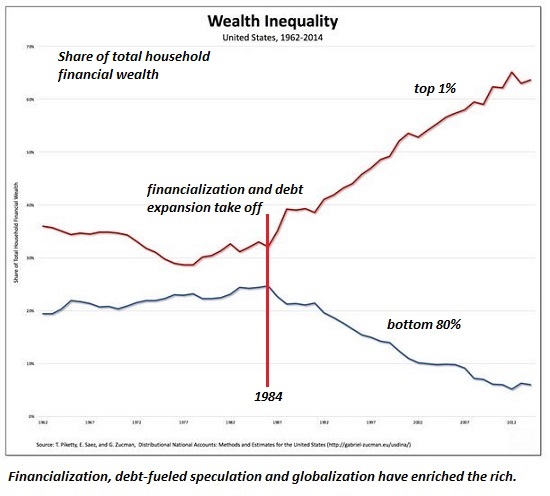
You won't find any MSM reporting on the neofeudal structure of America's economy and society:
Disclaimer: The facts and opinions expressed within this article are the personal opinions of the author. Picasso Creative Writing does not assume any responsibility or liability for the accuracy, completeness, suitability, or validity of any information in this article.
Summary: According to a new study, men have a stronger positive correlation between cardiorespiratory fitness and brain function as the...
Inspirations of passions
Make your interests gradually wider and more impersonal, until bit by bit the walls of the ego recede, and your life becomes increasingly merged in the universal life. An individual human existence should be like a river — small at first, narrowly contained within its banks, and rushing passionately past rocks and over waterfalls. Gradually the river grows wider, the banks recede, the waters flow more quietly, and in the end, without any visible break, they become merged in the sea, and painlessly lose their individual being.