Picasso Creative Writing Method: To execute, communicate and share our "CREATIVE MISSION" as set out below - *Comprehensive Creative Creativity with curated articles, posts, blogs and studies from around the world that support or relate to this rich inter-disciplinary approach to sustainable life-long creations and imagination.
Our "Creative Mission" is to foster a rich, interdisciplinary dialogue that will convey and forge new tools and applications for creative, critical and philosophical thinking; engaging the world in the process. Through workshops, tutorials and social media platforms we also strive to entertain, educate and empower people - from individuals, to businesses, governments or not-for-profit groups; we aim to guide them in building a base of constructive ideas, skills and a Brain Fit paradigm - thereby setting the stage for a sustainable, healthy, and creative approach and lifestyle . These synthesized strategic "Critical Success Factors" - can then give rise to applied long-term life or business - Operating Living Advantages and Benefits.
And, at the same time, we encourage Charlie Monger's key attitude and belief - for and with all of whom we reach - " develop into a lifelong self-learner through voracious reading; cultivate curiosity and strive to become a little wiser (and more grateful)* everyday."
CREATIVE MISSION Our "Creative Mission" is to foster a rich, interdisciplinary dialogue that will convey and forge new tools and applications for creative, critical and philosophical thinking; engaging the world in the process. Through workshops, tutorials and social media platforms we also strive to entertain, educate and empower people - from individuals, to businesses, governments or not-for-profit groups; we aim to guide them in building a base of constructive ideas, skills and a Brain Fit paradigm - thereby setting the stage for a sustainable, healthy, and creative approach and lifestyle . These synthesized strategic "Critical Success Factors" - can then give rise to applied long-term life or business - Operating Advantages and Benefits.
And, at the same time we foster this attitude and belief for and with all of whom we reach - " develop into a lifelong self-learner through voracious reading; cultivate curiosity and strive to become a little wiser everyday."
- Charlie Munger
CREATIVE WRITING
Some Promises for Starters
No spam
No pictures of weird politicians or similar desperadoes
No passing your details onto anyone else
No presuming that you’d love a copy unless you specifically say that you would
What We Do?
Firstly, under the conceptual framework of the Picasso CreativeWriting Method we provide one the most comprehensive approaches to creative, critical, meta and other forms of thinking, cognition and writing. And also incorporate our unique cubist creative module and related concepts - termed "Rationale Creativity"
Every month we curate hundreds of articles and blogs in a variety inter-related fields that include: neurology, linguistics, brain fitness, philosophy, mathematics, logic, cognitive science, metaphysics and other areas or fields that may have an impact directly or indirectly on integrated creative, critical and linear thinking and related writing and cognitive skills.
Our goal is to select articles, journal, or blog posts on a daily basis that will provide supporting facts, theories or ideas that are aligned with our "Creative Mission" and thereby aiding you in building long-term operating advantages and benefits - in life, and business.
Every month we post 21-23 articles form the hundreds that we curate, then at the end of the month, based on readers' responses and traffic, we then post the top five articles in the Monthly Newsletter. So, if you did not have an opportunity to follow us on a daily basis, then the Newsletter should be a useful tool highlighting and filtering leading topics and trends of the month.
It showcases - the best of the best - of the 20 or so, blog posts in that month.
Let's Keep In Touch
You can also add any information that you would like to share with us and other subscribers in our comments section – in the contact comments you may provide a brief outline of what you’ve written or hope to write, details of a blog or website you run and what you would be interested to read in the newsletter…anything you like really…
" followed by tens of thousands by email and social media "
GREAT MONTH!
NEW HEADQUARTERS, WORKSHOPS, SOLID READERSHIP GROWTH
to 171,639
NEW INTERNATIONAL HEADQUARTERS
Picasso Creative Writing Method
1 Yonge Street, Suite 1801
Toronto, Ontario
M5E 1W7 1.437.226.9025
PLEASE FEELFREE TO SHARE ANDDISTRIBUTE
Another Exciting Month!
Wow, International Readership continues to bust at the seams with solid growth for the sixth record consecutive month; bringing the total for the year to 171,639. Back in July results were just over 13,940, which means that end of January growth to-date was an amazing 1230.2% in just seven months.
What's new? As promised we have established our International Headquarters in downtown Toronto to facilitate our rapidly expanding global followers and supporters, and to provide for our ever-growing social and multi-media platforms and related product deliverables. The co-ordinates are provided above.
There's More? On January 14th we faced a standing room only crowd for our "Comprehensive Creative Creativity" presentation at The519. Needless to say the participants were outstanding and bubbling with enthusiasm as they tirelessly worked through the workshop exercises.
"In this month's creative writing workshop participants received information about the importance and influence of sleep, diet, physical exercise and meditation on brain's creativity. participants involved in various Picasso Method creative writing activities and explored creative writing techniques in a supportive environment, led by a local community member. " The519 Newsletter
Again, listed below are the Top FIVE Readers' Choice Posts for the month of January 2019
These top readers' monthly choice posts are specifically selected based on readers interactions and comments plus the guidance and scope of:
Our "Creative Mission" - to foster a rich, interdisciplinary dialogue that will convey and forge new tools and applications for creative, critical and philosophical thinking; engaging the world in the process. Through workshops, tutorials and social media platforms we also strive to entertain, educate and empower people - from individuals, to businesses, governments or not-for-profit groups; we aim to guide them in building a base of constructive ideas, skills and a Brain Fit paradigm - thereby setting the stage for a sustainable, healthy, and creative approach and lifestyle . These synthesized strategic "Critical Success Factors" - can then give rise to applied long-term life or business - Operating Advantages and Benefits.
6 Critical #Thinking #Skills You Need to Master Now
No matter what walk of life you come from, what industry you’re interested in pursuing or how much experience you’ve already garnered, we’ve all seen firsthand the importance of critical thinking skills. In fact, lacking such skills can truly make or break a person’s career, as the consequences of one’s inability to process and analyze information effectively can be massive.
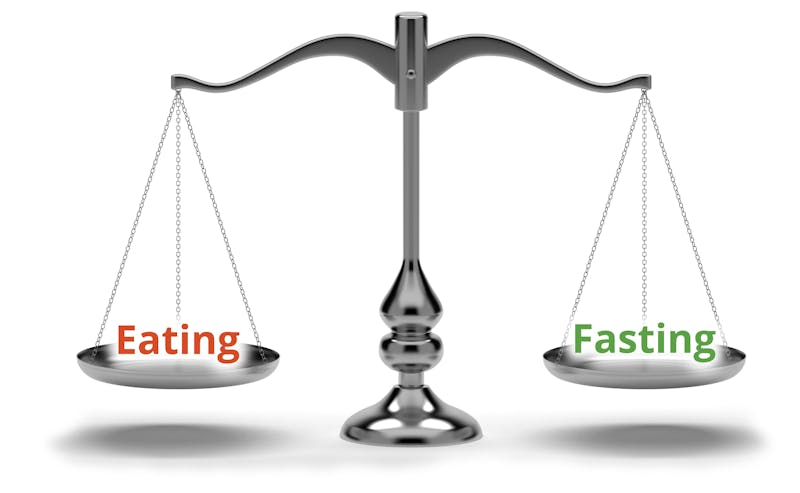
Dr. Jason Fung - Intermittent Fasting for Beginners
Intermittent fasting is the ancient secret of health. It is ancient because it has been practiced throughout all of human history. It’s a secret because this powerful habit has been virtually forgotten.
But now many people are re-discovering this dietary intervention. It can carry huge benefits if it is done right: weight loss, increased energy, reversal of type 2 diabetes and many other things. Plus, you’ll save time and money.
In this beginner’s guide you can learn everything you need to know about intermittent fasting.
Master “The Art of Thinking Clearly” Before Making Your Analytics Investments!
I lead the technology industry business unit for a fast-growing analytics firm. And one of the perks of my job is the numerous conversations I get to have with a variety of prospects or clients. I recently read the book ‘The Art of Thinking Clearly’ by Rolf Dobelli, which deals with systematic cognitive errors of human beings as a result of our evolution. I enjoyed reading the book immensely, relating those cognitive errors to what I experience every day. I am selecting a few rampant cognitive errors mentioned in the book and linking them to situations I have come across.
Spark: The Revolutionary New Science of Exercise and the Brain - Dr. John Ratey
I’m not sure why it’s so surprising to find out that if something’s good for your body, it’s good for your brain too. After all, the brain is part of the body so it makes perfect sense. Yet few of us have suspected just how good for the brain exercise can be. Written in an engaging storytelling style, Spark, The Revolutionary New Science of Exercise and the Brain by John J. Ratey, MD draws upon recent groundbreaking research, to explain how exercise enhances learning, lowers stress and anxiety, and can help the aging brain stay young.
Dr.#Mercola - Why We Sleep: The New Science of Sleep and Dreams
Sleep scientist and author Matthew Walker suggests a lack of sleep throughout industrialized nations is having a catastrophic impact on our health and wellness, and is fast becoming one of our greatest public health challenges More than 20 large-scale epidemiological studies, tracking millions of people over many decades, report the same clear relationship: the shorter your sleep, the shorter your life
Rather than being an optional lifestyle choice, Walker asserts sleep is a non-negotiable, biological necessity that provides a foundation for every aspect of your mental and physical health Sleeplessness has been shown to have a devastating effect on your health and well-being, contributing to chronic illnesses such as dementia, including Alzheimer’s disease, cancer, diabetes, heart disease and obesity
Walker suggests more vehicle crashes in the U.S. are caused by sleep-deprived drivers than those involving alcohol and drugs combined; when you drive drowsy, you put your life and the lives of countless others in jeopardy.
Disclaimer: The facts and opinions expressed within this article are the personal opinions of the author. Picasso Creative Writing does not assume any responsibility or liability for the accuracy, completeness, suitability, or validity of any information in this article.
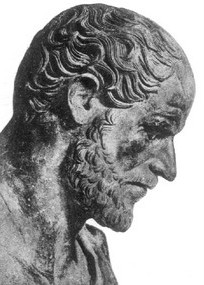
Aristotelian logic, after a great and early triumph, consolidated its position of influence to rule over the philosophical world throughout the Middle Ages up until the 19th Century. All that changed in a hurry when modern logicians embraced a new kind of mathematical logic and pushed out what they regarded as the antiquated and clunky method of syllogisms. Although Aristotle’s very rich and expansive account of logic differs in key ways from modern approaches, it is more than a historical curiosity. It provides an alternative way of approaching logic and continues to provide critical insights into contemporary issues and concerns. The main thrust of this article is to explain Aristotle’s logical system as a whole while correcting some prominent misconceptions that persist in the popular understanding and even in some of the specialized literature. Before getting down to business, it is important to point out that Aristotle is a synoptic thinker with an over-arching theory that ties together all aspects and fields of philosophy. He does not view logic as a separate, self-sufficient subject-matter, to be considered in isolation from other aspects of disciplined inquiry. Although we cannot consider all the details of his encyclopedic approach, we can sketch out the larger picture in a way that illuminates the general thrust of his system. For the purposes of this entry, let us define logic as that field of inquiry which investigates how we reason correctly (and, by extension, how we reason incorrectly). Aristotle does not believe that the purpose of logic is to prove that human beings can have knowledge. (He dismisses excessive scepticism.) The aim of logic is the elaboration of a coherent system that allows us to investigate, classify, and evaluate good and bad forms of reasoning.
To those used to the silver tones of an accomplished writer like Plato, Aristotle’s prose will seem, at first glance, a difficult read. What we have are largely notes, written at various points in his career, for different purposes, edited and cobbled together by later followers. The style of the resulting collection is often rambling, repetitious, obscure, and disjointed. There are many arcane, puzzling, and perhaps contradictory passages. This problem is compounded by the abstract, technical vocabulary logic sometimes requires and by the wide-ranging scope and the scattered nature of Aristotle’s observations. Some familiarity with Greek terminology is required if one hopes to capture the nuances in his thought. Classicists and scholars do argue, of course, about the precise Greek meaning of key words or phrases but many of these debates involve minor points of interpretation that cannot concern us here. Aristotle’s logical vocabulary needs to be understood within the larger context of his system as a whole. Many good translations of Aristotle are available. (Parenthetical citations below include the approximate Bekker number (the scholarly notation for referring to Aristotelian passages according to page, column, and line number of a standard edition), the English title of the work, and the name of the translator.)
Ancient commentators regarded logic as a widely-applicable instrument or method for careful thinking. They grouped Aristotle’s six logical treatises into a sort of manual they called the Organon (Greek for “tool”). The Organon included the Categories, On Interpretation, the Prior Analytics, the Posterior Analytics, the Topics, and On Sophistical Refutations. These books touch on many issues: the logical structure of propositions, the proper structure of arguments (syllogisms), the difference between induction and deduction, the nature of scientific knowledge, basic fallacies (forms of specious reasoning), debating techniques, and so on. But we cannot confine our present investigations to the Organon. Aristotle comments on the principle of non-contradiction in the Metaphysics, on less rigorous forms of argument in the Rhetoric, on the intellectual virtues in the Nicomachean Ethics, on the difference between truth and falsity in On the Soul, and so on. We cannot overlook such important passages if we wish to gain an adequate understanding of Aristotelian logic.
2. Categories
The world, as Aristotle describes it in his Categories, is composed of substances—separate, individual things—to which various characterizations or properties can be ascribed. Each substance is a unified whole composed of interlocking parts. There are two kinds of substances. A primary substance is (in the simplest instance) an independent (or detachable) object, composed of matter, characterized by form. Individual living organisms—a man, a rainbow trout, an oak tree—provide the most unambiguous examples of primary substances. Secondary substances are the larger groups, the species or genera, to which these individual organisms belong. So man, horse, mammals, animals (and so on) would be examples of secondary substances. As we shall see, Aristotle’s logic is about correctly attributing specific properties to secondary substances (and therefore, indirectly, about attributing these properties to primary substances or individual things).
Aristotle elaborates a logic that is designed to describe what exists in the world. We may well wonder then, how many different ways can we describe something? In his Categories (4.1b25-2a4),Aristotle enumerates ten different ways of describing something. These categories (Greek=kategoria, deriving from the verb to indicate, signify) include (1) substance, (2) quantity, (3) quality, (4) relation, (5) where, (6) when, (7) being-in-a-position, (8) possessing, (9) doing or (10) undergoing something or being affected by something. In the Topics (I.9, 103b20-25), he includes the same list, replacing “substance” (ousia) with “essence” (ti esti). We can, along with Aristotle, give an example of each kind of description: (1) to designate something as a “horse” or a “man” is to identify it as a substance or to attribute an essence to it; (2) to say that the wall is four feet long is to describe it in terms of quantity; (3) to say that the roof is “white” is to ascribe a quality to it; (4) to say that your weight is “double” mine is to describe a relation between the two; (5) to say something happened in the market-place is to explain where; (6) to say it happened last year is to explain when; (7) to say an old man is sitting is to describe his position; (8) to say the girl has shoes on is to describe what she possesses; (9) to say the head chef is cutting a carrot with a knife is to describe what he is doing; and finally, (10) to say wood is being burned in the fireplace is to describe what it means for the wood to undergo burning or to be affected by fire. Commentators claim that these ten categories represent either different descriptions of being or different kinds of being. (To be a substance is to be in a certain way; to possess quantity is to be in a certain way; to possess a quality is to be in a certain way, and so on.) There is nothing magical about the number ten. Aristotle gives shorter lists elsewhere. (Compare Posterior Analytics, I.22.83a22-24, where he lists seven predications, for example). Whether Aristotle intends the longer lists as a complete enumeration of all conceivable types of descriptions is an open question. Scholars have noticed that the first category, substance or essence, seems to be fundamentally different than the others; it is what something is in the most complete and perfect way. Read More.
You wouldn’t have thought that essays have much in common with creative writing. You should also read… How to Improve Your E...
Inspirations of passions
Make your interests gradually wider and more impersonal, until bit by bit the walls of the ego recede, and your life becomes increasingly merged in the universal life. An individual human existence should be like a river — small at first, narrowly contained within its banks, and rushing passionately past rocks and over waterfalls. Gradually the river grows wider, the banks recede, the waters flow more quietly, and in the end, without any visible break, they become merged in the sea, and painlessly lose their individual being.